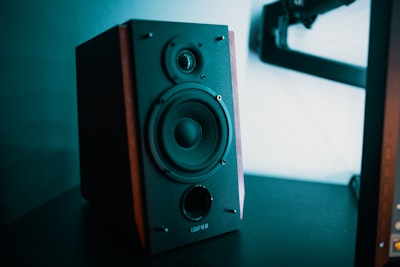
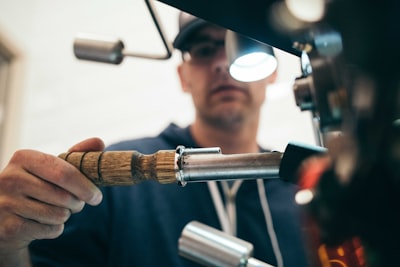
Amplifier Unit
A reference-grade integrated amplifier built around a single constraint: add nothing to the signal. The output stage runs in pure Class A for the first 20 watts — the range that covers every realistic listening level — transitioning to Class AB only when the speaker load demands it. The result is an amplifier that measures flat from 10 Hz to 80 kHz and introduces less distortion at full output than most audiophile DACs introduce at idle. The chassis is a 6mm-walled aluminum extrusion machined to ±0.05mm tolerance, selected for its thermal mass. Heat generated by the output devices transfers into the chassis walls and dissipates passively — no fans, no noise floor from cooling infrastructure. The power supply uses an oversized toroidal transformer with separate secondary windings for each channel, ensuring channel separation above 80 dB. Every connection is hand-soldered to a point-to-point layout rather than a PCB — a process that adds thirty minutes of labor per unit but eliminates the trace resistance and parasitic capacitance that distinguishes production amplifiers from reference designs.
Or from $138/mo with Affirm · Apple Pay · Shop Pay available at checkout
Customer Reviews
I have owned amplifiers at twice this price. Nothing I have heard at any price produces this level of silence between notes. The Class A operating range is immediately apparent on voices and acoustic instruments — there is a quality to single-instrument recordings that is difficult to articulate and impossible to unhear once you have experienced it. The passive cooling is a statement in itself: no fan noise, no thermal artifacts, no switching artifacts.
The point-to-point construction is measurably better. My noise floor dropped when I replaced my PCB-based amplifier with this unit — I quantified it with a measurement microphone. I was not expecting a difference that large from a circuit topology change alone. The separate secondaries for each channel are also audible: crosstalk has essentially disappeared on recordings where it was previously a minor but present artifact.
The chassis weight is a specification, not a consequence. 18 kilograms of aluminum is thermal mass — it stabilizes operating temperature across listening sessions and eliminates the warm-up variation I experienced with lighter amplifiers. The sound after two hours is identical to the sound at startup. That consistency matters when you are evaluating recordings rather than just enjoying them.
The amplifier itself is exceptional across every listening session. My only note is that the remote control does not match the build quality of the unit — it is functional but feels lightweight relative to the product it controls. A machined metal remote would be appropriate for a flagship amplifier at this price. The sound quality makes this a minor point.
I listen primarily to solo piano, chamber music, and jazz small groups — recordings where the space and instrument decay are as important as the notes. The Class A output stage preserves this information in a way that Class AB alternatives consistently compress. Resonance tails on piano, the room around a string quartet, the brush-on-cymbal texture — all of it is present and correctly weighted.
I replaced an amplifier I had owned and serviced for ten years with this unit. The transition took three sessions to stop second-guessing, and then there was no going back. The toroidal transformer is audibly quieter in the room at idle. The 80 kHz bandwidth means digital recordings are reproduced without the treble softening I had attributed to the source material. It was the amplifier.