Tour-Grade Golf Simulator
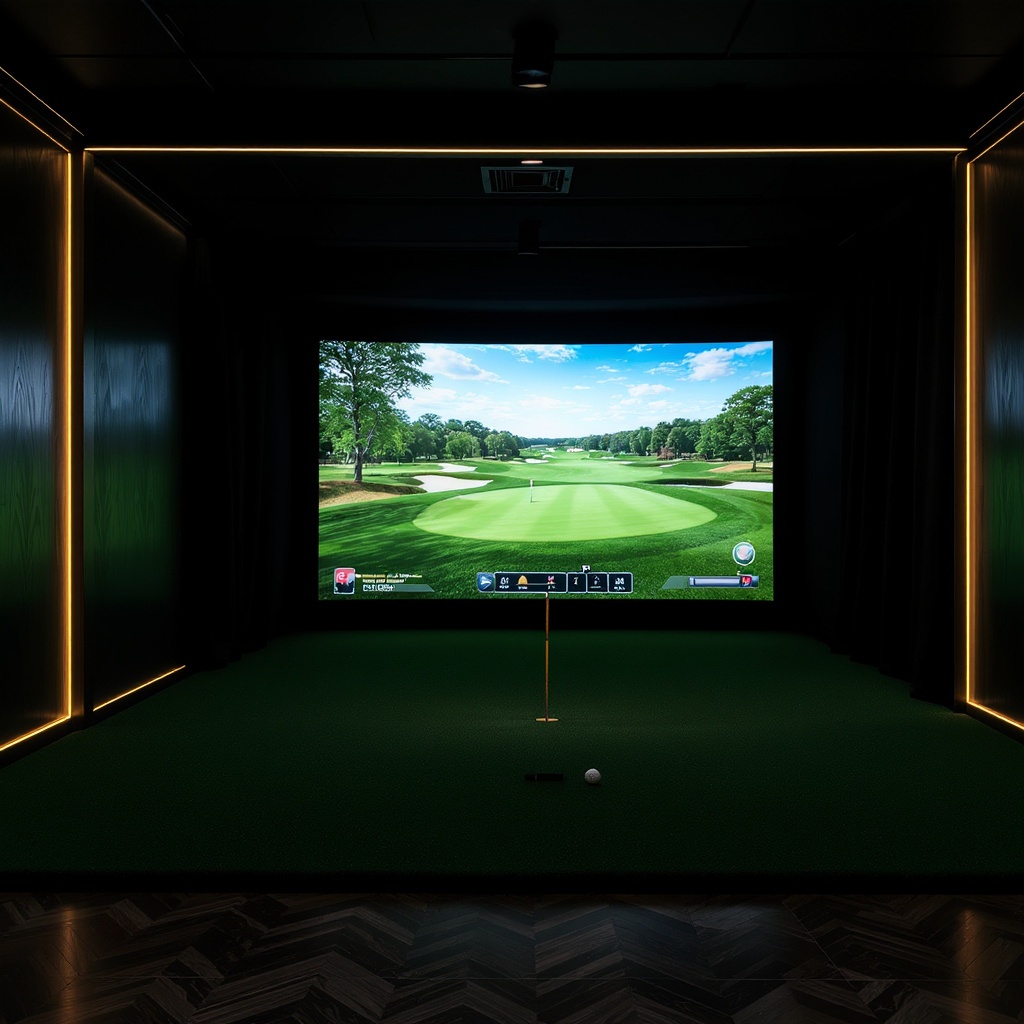
Twelve months of weather and travel are no longer prerequisites for great golf. The Tour-Grade Simulator delivers sub-millisecond ball tracking, a 4K ultra-short-throw projection system, and a software library spanning 90 of the world's most demanding courses — all calibrated to within one degree of true launch angle. The enclosure is engineered from acoustic-grade panels that deaden impact noise to a whisper, making it suitable for any room in the home. This is not a gaming accessory. Every component has been selected through the same supply chain trusted by club-fitting studios and teaching academies. The hitting mat replicates tight fairway lies and soft rough alike, and the data overlay gives you the same Trackman-class figures your tour professional reviews after every range session. Setup takes a single afternoon. Once calibrated to your ceiling height and room footprint, the system remembers it. What it gives back is the ability to practice seriously, anywhere, in any season.
Or from $1208/mo with Affirm · Apple Pay · Shop Pay available at checkout
Customer Reviews
I play in January now. The tracking data is identical to what I see when I get on a real Trackman at the academy — ball speed, launch angle, spin rate, carry distance all match within the margin of environmental variation. This machine paid for itself in range fees and flight costs within two years of ownership. The course library update I received in February added six new layouts without additional charge.
The image quality is extraordinary. Standing over a putt at St Andrews in my basement is genuinely surreal — the 4K laser projection at that screen size is more immersive than I expected from any home setup. My handicap dropped four shots in a single winter of dedicated practice. The swing data overlay confirmed that my transition was the issue. I fixed it. Three years of lessons had not told me what the data showed in one session.
I was concerned about impact noise before ordering. The acoustic enclosure panels reduce the sound of ball impact from a sharp crack to a dull thud that does not penetrate into adjacent rooms. I use this in a room adjacent to a home office without disturbing calls. The difference relative to a bare hitting net in the same space is significant.
The simulator itself delivers on every specification. The setup time is a full day if you are doing it alone — the instructions are thorough but the physical assembly of the enclosure panels requires two people for most steps. Budget a weekend and recruit help. Once calibrated, the system has required zero attention in four months of regular use.
I used the shot dispersion and club gapping data in the first week to confirm that I was carrying three clubs with overlapping distances. I reconfigured my bag and added a utility club I had been missing. The course simulator is compelling, but the raw data capability is what makes this a serious practice tool rather than an entertainment system.
The iOS companion app syncs swing history across sessions and presents it in a format that a non-engineer can act on. I can see session-over-session trends in launch angle and face angle without needing to interpret raw numbers. The app is the reason I practice more frequently — reviewing the previous session before the next one turns a hobby into a training program.