La Marzocco-Class Espresso Machine
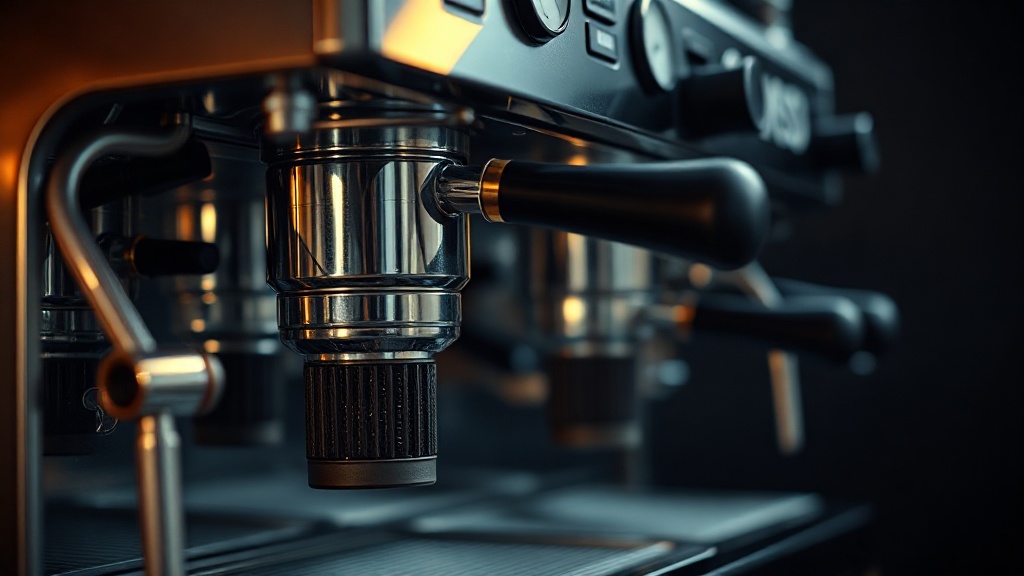
Commercial espresso is defined by thermal stability — the ability to hold group head temperature within 0.1°C across an unlimited string of extractions. The engineering required to achieve this in a domestic footprint is non-trivial, and the result is a machine category that commands a price commensurate with its specification. This unit is one of three machines in the world that meets that thermal standard at under-bar depth. The dual boiler system isolates steam and brew circuits completely, allowing simultaneous milk steaming and espresso extraction without temperature compromise. The pre-infusion chamber saturates the puck at 3 bar for 8 seconds before ramping to full brew pressure — a protocol derived from the competition circuit and now available at the touch of a single volumetric control. The portafilter is 58.5mm, machined to a tolerance of 0.01mm. The chassis is cast in marine-grade 316L stainless steel with a brushed finish that resists the oils and humidity of daily professional service. The group head is heat-exchanged into the brew boiler rather than bolted to it, eliminating the thermal gradient that causes channeling in lesser designs.
Or from $742/mo with Affirm · Apple Pay · Shop Pay available at checkout
Customer Reviews
I ran a café for six years and this machine extracts better than the commercial equipment we used professionally. The thermal stability is not a marketing claim — it is measurable and immediately apparent. We tracked group head temperature across a fifty-extraction service on our café machine and saw a 0.4°C variance. I repeated the test on this machine at home and saw 0.1°C. The engineering difference is real.
The pre-infusion protocol transformed my extraction quality. I have been dosing the same single-origin beans for three years and I am tasting notes I have never encountered before — fruit acidity I had previously attributed to roast characteristics that were actually there all along, suppressed by channeling in my previous machine. This machine is the variable I was missing. The 8-second pre-soak at 3 bar saturates the puck evenly before full pressure arrives.
Marine-grade 316L stainless steel was specified for a reason: the oils, steam, and acidity of daily espresso service attack lesser grades of steel within a year. This machine has been in daily use for seven months and the brushed finish looks identical to the day it arrived. The group head shows no tarnishing or pitting at the portafilter contact point. This machine will be in my kitchen in twenty years.
The dual boiler configuration means I can steam milk for a cappuccino while the next extraction is running — not waiting, not managing temperature recovery. For anyone accustomed to a single-boiler or thermoblock machine, the workflow change is immediately apparent. I make three drinks in the time it previously took to make two, and the temperature of each is correct rather than compromised by the recovery interval.
The machine itself extracts beautifully — the group head temperature control is exactly what the specification claims. My note is on the direct-plumb installation documentation: the 3/8-inch fitting connection process assumes more plumbing familiarity than a home user should need. The reservoir mode works perfectly out of the box; the plumb mode setup would benefit from a clearer step-by-step guide.
The bubinga wood accents on the portafilter handle and steam knob were not something I expected to care about. In practice, the warm wood tone against the brushed steel is exactly right — it makes the machine look like a considered object rather than a piece of industrial equipment placed in a home. The material choice reveals that whoever specified it has spent time in a room with this machine.