
Chronograph I
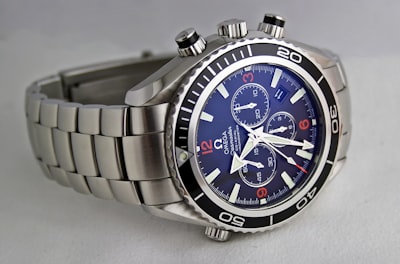
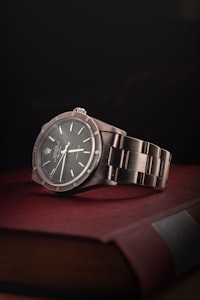
The Chronograph I exists at the ceiling of the mid-tier and the floor of the collector's tier — a position that demands clarity about what you are buying. The answer is: an in-house movement with vertical clutch and column wheel; a case built to last a generation; and finishing that rewards close examination. The movement is the defining choice. Built entirely in-house, it runs at 36,000 vph — a higher frequency than most mechanical chronographs — which delivers smoother sweep-second hand motion and tighter timing precision across the chronograph function. The vertical clutch is visible: when you start the chronograph, the second hand begins its sweep without a fractional jump. That is a design decision made in the movement, not in the dial. The case is 40mm in Grade 5 titanium, giving the weight of a steel watch at roughly 60% of the mass. The titanium is finished with a combination of brushed flanks and polished chamfers that reads as considered rather than showy — the finishing is directional rather than uniform, which is the correct approach at this tier.
Or from $1233/mo with Affirm · Apple Pay · Shop Pay available at checkout
Customer Reviews
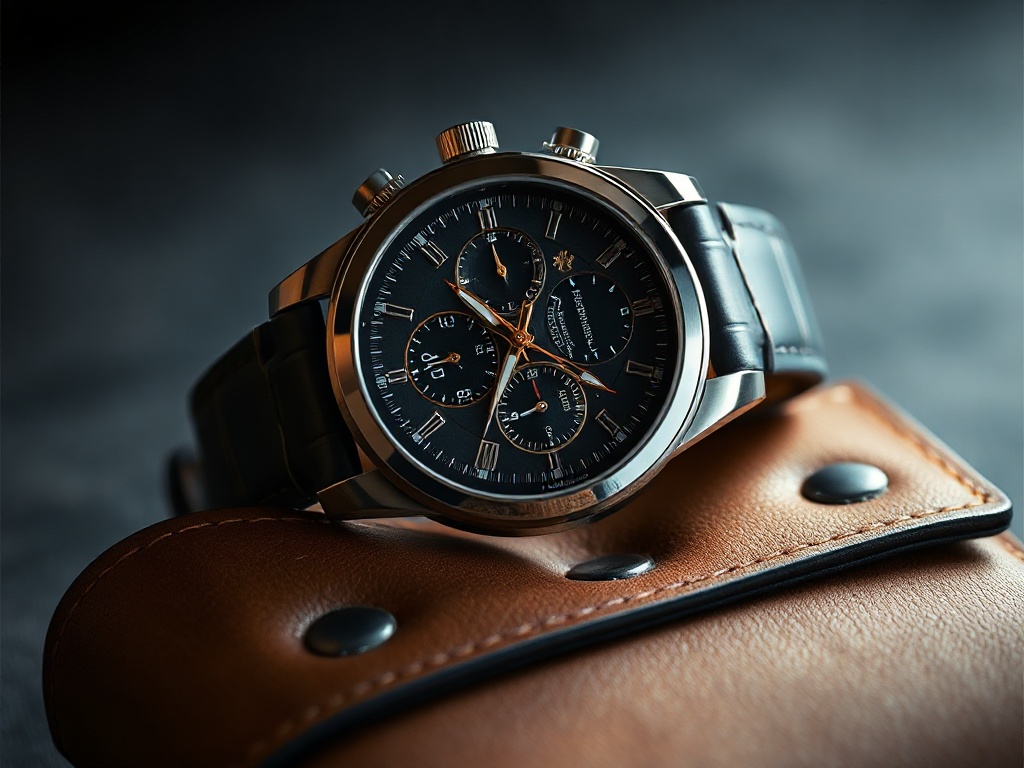
I have owned watches running at 28,800 and 21,600 vph. The 36,000 vph movement on the Chronograph I is perceptibly different in one respect: the sweep second hand moves continuously rather than stepping. On a chronograph where you are measuring elapsed time, that smoothness is more than aesthetic — it makes the timing function feel like a precision instrument rather than a display. The vertical clutch makes this immediately apparent when you start and stop the chronograph.
The weight difference between this and an equivalent steel watch is the first thing you notice. The Grade 5 titanium case at 40mm wears like a 38mm steel piece — the mass is distributed rather than concentrated. After four hours of wear, I stopped noticing the watch. That is the correct outcome for a watch at this price. The bracelet with ceramic ball joints is the right specification for titanium — the articulation is better than any link-based titanium bracelet I have encountered.
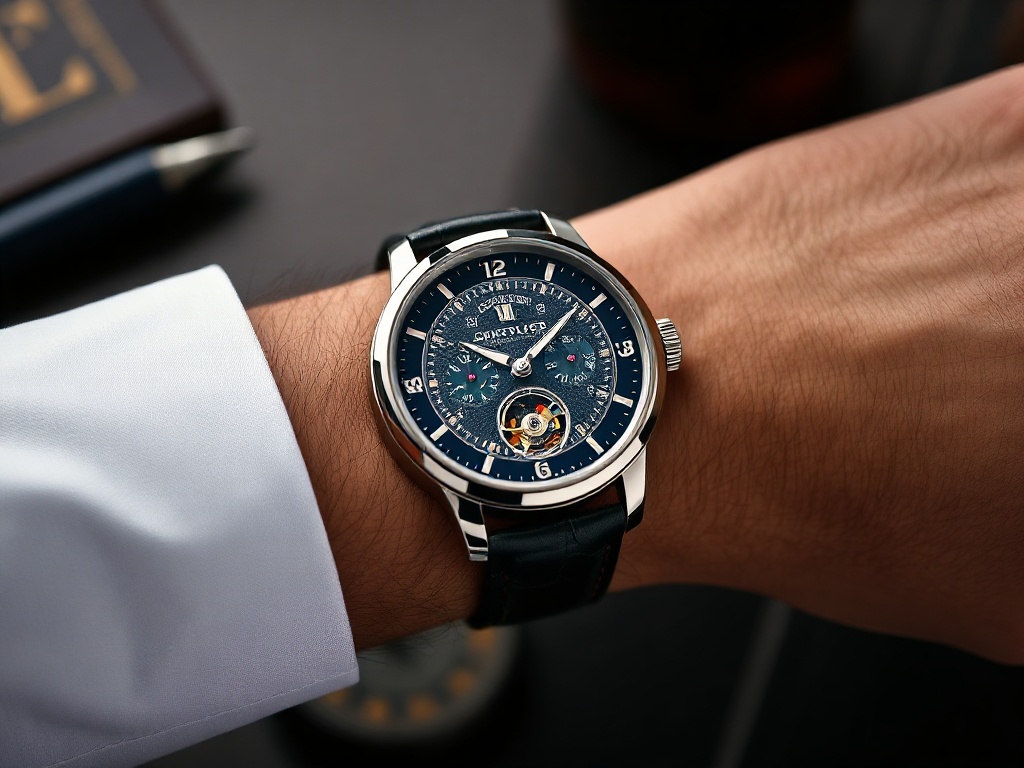
Most exhibition casebacks reveal a movement that is competent but not worth the view. The movement inside the Chronograph I is finished with Geneva stripes, anglage on the bridges, and a perlage base plate that justifies opening the case. The silicon hairspring is visible — the antimagnetic specification is not abstract when you can see the component. That is the difference between an exhibition caseback as a design feature and one as an engineering statement.
Most watches that include a rubber strap treat it as an afterthought — a filler for the dive use-case that the buyer will replace at the first opportunity. The rubber strap that ships with the Chronograph I is the right material: not sticky, not stiff, and shaped to fit the case geometry correctly. I have used it as the primary strap for six weeks. The titanium bracelet is still the primary, but knowing the rubber alternative is there and is correct changes the wearing proposition.
I was skeptical of the ceramic ball-joint bracelet design until I wore it. The articulation at each joint is smooth and directional — the bracelet moves with the wrist in a way that a traditional link bracelet does not. The ceramic balls are the load-bearing elements, which means the bracelet flexes where you want it to flex rather than where the link geometry forces it to. The result is a bracelet that feels more like a watch on the wrist than a mechanical object strapped to your arm.